Hasene

Zakat and Fitra Campaign

Zakat, one of the five pillars of Islam, is obligatory for Muslims. Fitra (the charity given at the end of Ramadan) is the charity that wealthy individuals must give to the poor during the month of Ramadan. Zakat is given to the following eight categories of people, as mentioned in verse 60 of Surah At-Tawbah: “Charity (Zakat) is only for the poor, the needy, the tax collectors, those who wish to be won over (to Islam), slaves, debtors, those striving in the way of Allah, and wayfarers. Allah is All-Knowing, All-Wise.”

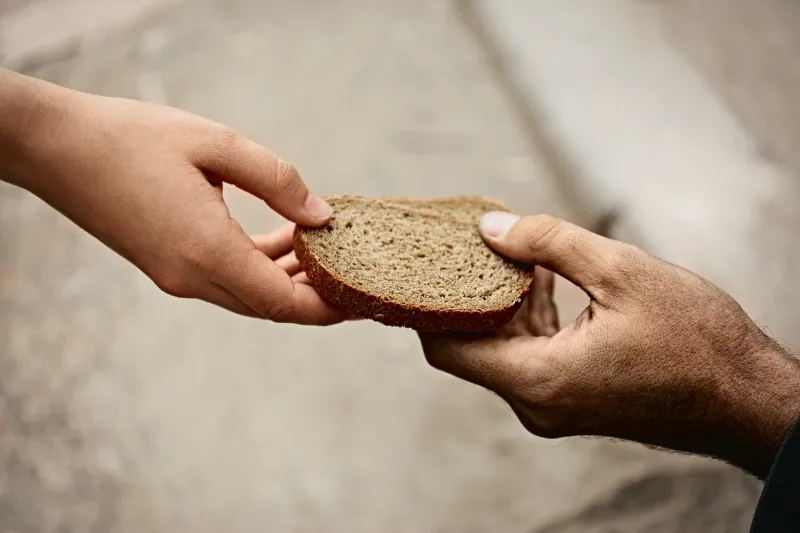
Through the Zakat and Fitra Campaign, donations are collected in a fund and distributed to the 8 categories mentioned in the Quran. In addition to extending a helping hand to the oppressed, the disadvantaged, migrants, and refugees through institutionally disciplined efforts, this fund also supports initiatives aimed at representing and promoting Islam in the best possible way, particularly in Europe, supporting students in education, and contributing to the revitalization and development of society.


Frequently Asked Questions

A person has met their basic needs. A year later, they have 3,800 Euros in cash, 50 grams of gold (jewelry), and 1,250 Euros in savings or a housing savings account. The 50 grams of gold itself does not reach the nisab (minimum threshold for zakat). However, since the other assets exceed the nisab, they are subject to zakat. Therefore, 50 grams x 37.07 Euros* = 1,853.50 Euros. Accordingly: 3,800 Euros + 1,853.50 Euros + 1,250 Euros = 6,903.50 Euros. 2.5% of this amount is paid as zakat. This means that 6,903.50 Euros x 0.025 = 172.58 Euros is the zakat.* The price of gold per gram on 08.03.2019 was 37.07 €. The calculation of the price per gram of gold should be determined according to the date on which zakat is to be paid.

The hadiths specify from which goods and in what quantity the zakat al-fitr should be given. However, due to differences in the scales used at that time and variations in the use of goods, Islamic scholars have stated that the current amount of zakat al-fitr should be at least enough to cover one person's daily food needs. The current amount of zakat al-fitr per person is 10 Euros.

On our website, under the "Donate Now" section, select the Zakat and Fitra section. Choose the appropriate option and determine the amount of your donation according to your circumstances. Then, press the "Continue" button and, on the next page, fill in your information completely to make your payment. Alternatively, you can place your Zakat, Fitra, or Sadaqah donations inside the Hasene Zakat and Fitra envelope and deliver it to the nearest IGMG branch. Or, you can make a bank transfer to the specified bank account, specifying that it is for Zakat, Fitra, or Sadaqah.

In the Holy Quran, the act of giving zakat is mentioned explicitly with the word "zakat" in 30 verses, and its payment is commanded. However, the word "sadaqa" (charity) appears in 14 verses, some of which also refer to zakat; "Take charity from their wealth so that you may purify them and elevate them. And pray for them; for your prayer is a tranquility for them. And Allah is Hearing, Knowing." (At-Tawbah, 9:103) "Indeed, you are called upon to spend in the way of Allah, yet some of you are stingy. But whoever is stingy, is only stingy towards himself. And Allah is rich, and you are poor. If you turn away from Him, He will replace you with another people, and they will not be like you." (Surah Muhammad, 47:38) These three verses are evidence that zakat is an obligatory act of worship: “Perform the prayer and pay the zakat.” (Surah Al-Baqarah, 2:110) “Take zakat from the wealth of the believers so that you may purify them and increase their wealth.” (Surah At-Tawbah, 9:103) “Pay the due due of the harvest on the day of harvest.” (Surah Al-An'am, 6:141)

Zakat is obligatory upon every intelligent, mature, Muslim, and free man and woman who possesses wealth exceeding the nisab amount from zakatable assets acquired over the past year, after deducting their basic needs and debts.

It is permissible to pay zakat on gold, silver, agricultural products, livestock, and trade goods in kind, as well as in their monetary value. The purpose of zakat is to meet the needs of those in need. Zakat can be paid directly from the property itself, but more often it is paid by giving the monetary value of the property, and those in need use this amount to meet their needs.

The animals subject to zakat must be domesticated and belong to one of the following six types: sheep, goats, cattle, buffalo, camels, and horses. According to Abu Hanifa, zakat is obligatory on horses as well. However, according to Abu Yusuf and Imam Muhammad, zakat is not required on horses. This second opinion is the basis of the fatwa. Zakat is also not required for mules, donkeys, and deer.

Failing to pay zakat (obligatory charity) leads to both worldly and otherworldly punishments. The following verses and hadiths point to the worldly harms of not paying zakat. The verses are: “Let those who are stingy with what Allah has given them of His bounty not think that it is good for them; rather, it is bad for them. And what they were stingy with will be wrapped around their necks on the Day of Resurrection. And to Allah belongs the inheritance of the heavens and the earth. And Allah is aware of all that you do.” (Al-Imran, 3:180) “Have you seen the one who denies the religion? He is the one who pushes away the orphan and does not encourage feeding the poor. Woe to those who pray but do not take their prayers seriously. They are show-offs and hinder good.” (Surah Al-Maun, 1-7) Hadiths: “If charity (Zakat) is mixed with wealth, that wealth will perish.” (Bayhaqi) “Whoever does not pay the Zakat on his wealth, Allah (SWT) will remove His protection from his wealth.” (Lubab al-Hadith) We can summarize the warnings understood from the verses and hadiths mentioned above as follows: 1. It is mentioned that if Allah's command regarding Zakat is disregarded and stinginess is shown, Allah (SWT) will take this duty from us and give it to another community. 2. It is stated that whatever wealth Zakat is mixed with will inevitably perish.

Zakat refers to goods other than gold, silver, and money; household goods, real estate, livestock, agricultural products, clothing, and similar movable and immovable properties prepared for trade. The ruling on real estate such as houses, shops, land, fields, gardens, etc., acquired by the owner for the purpose of selling and making a profit, is the same as that of commercial goods. Such real estate is subject to zakat, just like commercial goods. However, zakat is not required on houses allocated to the owner or a relative that do not generate rental or similar income, workplaces used for trade, warehouses, offices, and facilities used for industrial purposes. 1. Conditions for Taking Zakat from Commercial Goods: a) Reaching the Nisab Amount of Commercial Goods: For commercial goods whose value at the beginning of the year was at least 560 grams of silver or 80 grams of gold, their value at the end of the year is used as the basis for zakat. Zakat is given according to these values. b) One Year Having Passed Since the Acquisition of Commercial Goods: It is a condition that one year must have passed since the date of acquisition of the commercial goods, based on their value. It is not a condition that a year must pass over the property itself. According to the Hanafi and Maliki schools of thought, the beginning and end of the year are valid in this regard, not the middle. If someone possesses the minimum amount of wealth (nisab) at the beginning of the year, and this wealth decreases during the year, and then reaches the nisab again at the end of the year, then zakat must be paid on this wealth. c) Intention to Trade at the Time of Purchase: When purchasing commercial goods, it is necessary to intend to trade them. If the intention is made after acquiring these goods, the intention must be close to the act of trading. Unless there is an action such as offering for sale, advertising for sale, or authorizing someone else to sell, a good does not become a commercial good merely by intention. If a good, such as a plot of land, some furniture, a carpet, or a quantity of grain, is stored for future sale, it is not considered a commercial good. Therefore, zakat is not required on it after a year has passed. If someone uses a property on the outskirts of the city for growing agricultural products or as a warehouse, etc. If the property is rented out for commercial use, then the income from this property is subject to zakat. However, once it falls within the municipal development area, is subdivided, and offered for sale, it transforms into a commercial good and becomes subject to zakat of one-fortieth of its value. In summary, for something to be considered a commercial good and subject to zakat, it must reach the minimum threshold (nisab), a year must have passed, the intention and actual commencement of trade must be present, and the goods must be suitable for commercial purposes. 2. Calculation of Zakat on Commercial Goods: After a year has passed since the acquisition of commercial goods, the nisab is determined by choosing gold or silver, whichever is more beneficial for those in need. In determining the wealth threshold, excluding basic necessities, the preferred view is that a person deducts their own and their dependents' annual expenses and debts. If the remaining cash or commercial goods reach the nisab amount and a year has passed, these are added together and subject to zakat of one-fortieth. (Ibn al-Humam, Fath al-Qadir, Vol. 1, p. 528) Zakat on commercial goods can be given as one-fortieth in kind, or one-fortieth of the value of the goods. The person obligated to pay zakat has the right to choose in this matter. Because commercial goods are goods on which zakat is obligatory. Since zakat on gold, silver, animals, or agricultural products can be given in kind, it is permissible to give zakat on these goods in kind as well. Profits earned from trade throughout the year, offspring born from animals, inheritance, gifts, and other non-commercial sources are added to the capital. At the end of the year, these are evaluated as a whole and zakat is calculated. However, additions that occur after the year is not added to the original capital.

On our website, under the "Donate Now" section, select the Zakat and Fitra section. Choose the appropriate option and determine the amount of your donation according to your circumstances. Then, press the "Continue" button and, on the next page, fill in your information completely to make your payment. Alternatively, you can place your Zakat, Fitra, or Sadaqah donations inside the Hasene Zakat and Fitra envelope and deliver it to the nearest IGMG branch. Or, you can make a bank transfer to the specified bank account, specifying that it is for Zakat, Fitra, or Sadaqah.

The following hadiths are evidence that zakat is obligatory: “Islam is built upon five pillars, one of which is giving zakat.” (Bukhari, Iman, 1,2; Muslim, Iman, 19-22; Tirmidhi, Iman, 3; Nasai, Iman, 3.) When the Prophet (peace and blessings be upon him) sent Muaz ibn Jabal (may Allah be pleased with him) as governor to Yemen, he said to him: “Inform them that Allah Almighty has made zakat obligatory upon them. Collect zakat from their wealthy and give it to the needy.” (Bukhari, Zakat, 1; Abu Dawud, Zakat, 5; Nasai, Zakat, 46; Ibn Majah, Zakat, 1.) For centuries, all mujtahid scholars have unanimously agreed that zakat is an obligatory act of worship. Zakat is a financial obligation that every Muslim who is liable for zakat must fulfill once a year. Therefore, whoever denies the obligation of zakat is considered to have left Islam. Even if one accepts the obligation of zakat without doubt, giving less than the required amount is considered sinful.

“Charity (Zakat) is a duty ordained by Allah, and it is only for the poor, the needy, the collectors, those whose hearts are to be won over (to Islam), slaves, debtors, those who strive in the cause of Allah, and the traveler. Allah is All-Knowing, All-Wise.” (Surah At-Tawbah, 9:60) According to the interpretation of scholars, Zakat can be distributed equally among the eight categories mentioned in the verse, or it can be given to one or several categories depending on the circumstances. Zakat and Fitra are not only the right of the poor; there are other groups entitled to receive Zakat. Therefore, a fair distribution among those who are deserving is necessary. The practice of Zakat has been considered a communal act of worship in Islamic history. For this reason, a social organization was deemed necessary to prevent the humiliation of the poor and other needy. This social organization, as stated above, is also a duty. Therefore, it is spent as needed on: needy university students and other students; the religious and cultural education of our children in Europe; service activities supporting education; the poor, widows, orphans, and those stranded on the road who have no income; poor patients who cannot receive treatment due to financial difficulties; needy schools, foundations, and hospitals; those affected by natural disasters such as earthquakes and floods; those in need who serve Islam and Muslims; those who are oppressed and victimized due to wars and refugees; the expenses of all institutions necessary for the continuation of the Muslim presence; and all charitable groups.

Zakat is an expression of gratitude for the blessing of wealth bestowed by Allah (SWT). Zakat does not diminish wealth; on the contrary, it increases and becomes more abundant. No one has ever been found to have gone bankrupt because of giving charity. The Holy Quran states this as follows: “If you are grateful, I will surely increase [your blessings] upon you.” (Ibrahim, 14:7) “[…] those who give zakat will surely have their reward with their Lord…” (Bakara, 2:277) The Prophet Muhammad (peace be upon him) said: “Protect your wealth by giving zakat, treat your illnesses by giving charity, and prepare yourselves for future calamities by praying.” (Tabarani and Abu Nuaym al-Hilya) “Purify your wealth by giving zakat.” (Lubab al-Hadith)

It is permissible to pay zakat on gold, silver, agricultural products, livestock, and trade goods in kind, or in their monetary value. Owners have the right to choose. This applies to tithes, land tax, alms, vows, and expiations other than freeing animals. The purpose of zakat is to meet the needs of those in need. Zakat can be paid directly from the property itself, but more often it is paid in monetary value, which those in need can use to meet their own needs. Therefore, for the zakat on gold, one can give food or cloth equivalent to its value. Similarly, for grazing animals or trade goods, one can give cash. However, it is more appropriate to choose what is most beneficial to those in need.

Zakat refers to goods other than gold, silver, and money; household goods, real estate, livestock, agricultural products, clothing, and similar movable and immovable properties prepared for trade. The ruling on real estate such as houses, shops, land, fields, gardens, etc., acquired by the owner for the purpose of selling and making a profit, is the same as that of commercial goods. Such real estate is subject to zakat, just like commercial goods. However, zakat is not required on houses allocated to the owner or a relative that do not generate rental or similar income, workplaces used for trade, warehouses, offices, and facilities used for industrial purposes. 1. Conditions for Taking Zakat from Commercial Goods: a) Reaching the Nisab Amount of Commercial Goods: For commercial goods whose value at the beginning of the year was at least 560 grams of silver or 80 grams of gold, their value at the end of the year is used as the basis for zakat. Zakat is given according to these values. b) One Year Having Passed Since the Acquisition of Commercial Goods: It is a condition that one year must have passed since the date of acquisition of the commercial goods, based on their value. It is not a condition that a year must pass over the property itself. According to the Hanafi and Maliki schools of thought, the beginning and end of the year are valid in this regard, not the middle. If someone possesses the minimum amount of wealth (nisab) at the beginning of the year, and this wealth decreases during the year, and then reaches the nisab again at the end of the year, then zakat must be paid on this wealth. c) Intention to Trade at the Time of Purchase: When purchasing commercial goods, it is necessary to intend to trade them. If the intention is made after acquiring these goods, the intention must be close to the act of trading. Unless there is an action such as offering for sale, advertising for sale, or authorizing someone else to sell, a good does not become a commercial good merely by intention. If a good, such as a plot of land, some furniture, a carpet, or a quantity of grain, is stored for future sale, it is not considered a commercial good. Therefore, zakat is not required on it after a year has passed. If someone uses a property on the outskirts of the city for growing agricultural products or as a warehouse, etc. If the property is rented out for commercial use, then the income from this property is subject to zakat. However, once it falls within the municipal development area, is subdivided, and offered for sale, it transforms into a commercial good and becomes subject to zakat of one-fortieth of its value. In summary, for something to be considered a commercial good and subject to zakat, it must reach the minimum threshold (nisab), a year must have passed, the intention and actual commencement of trade must be present, and the goods must be suitable for commercial purposes. 2. Calculation of Zakat on Commercial Goods: After a year has passed since the acquisition of commercial goods, the nisab is determined by choosing gold or silver, whichever is more beneficial for those in need. In determining the wealth threshold, excluding basic necessities, the preferred view is that a person deducts their own and their dependents' annual expenses and debts. If the remaining cash or commercial goods reach the nisab amount and a year has passed, these are added together and subject to zakat of one-fortieth. (Ibn al-Humam, Fath al-Qadir, Vol. 1, p. 528) Zakat on commercial goods can be given as one-fortieth in kind, or one-fortieth of the value of the goods. The person obligated to pay zakat has the right to choose in this matter. Because commercial goods are goods on which zakat is obligatory. Since zakat on gold, silver, animals, or agricultural products can be given in kind, it is permissible to give zakat on these goods in kind as well. Profits earned from trade throughout the year, offspring born from animals, inheritance, gifts, and other non-commercial sources are added to the capital. At the end of the year, these are evaluated as a whole and zakat is calculated. However, additions that occur after the year is not added to the original capital.

1. Nisab (Minimum Tax Requirement) for Gold and Silver: The nisab for gold and silver, according to Islamic law, is 80 grams, while the nisab for silver is 560 grams. A person who possesses more than 80 grams of gold or 560 grams of silver, or their equivalent in money or trade goods, after deducting debts and essential needs, becomes obligated to pay zakat, even if a year has passed. The zakat rate for gold, silver, and money is one-fortieth, or 2.5%. Accordingly, 2 grams of zakat are required for 80 grams of gold, and 14 grams for 560 grams of silver.


2. Zakat on Jewelry: Zakat is required on jewelry sets, paintings, bowls, spoons, forks, and similar items made of gold or silver when they reach the minimum threshold (nisab). This is because gold and silver are valuable commodities and are inherently designed for trade. Furthermore, they inherently possess a market value (semen). Therefore, whether in ingot form, cast, or as decorative items, the owner is obligated to pay zakat on them.
3. Completing the Nisab: Gold, silver, money, and trade goods are added together to complete the nisab. Accordingly, if someone possesses a certain amount of gold and silver, and also some trade goods, and the total value of these reaches the nisab amount, for example, 80 grams of gold, then zakat at a rate of one-fortieth (1/40th) is required.
4. Zakat on Gold and Silver of Lower Purity: Gold or silver mixed with a lower-value metal is called "maghshush" (adulterated gold). For example, mixing gold with silver or silver with copper. When gold and silver are mixed with another metal, if the gold is more abundant, it is considered gold; if the silver is more abundant, it is considered silver. If the mixed metal constitutes more than half of the gold or silver, and the gold or silver portion reaches the nisab (minimum threshold for zakat), or if there is other money or trade goods involved, the zakat is calculated accordingly. If these are trade goods, the other metal portion is also considered separately. If the gold or silver portion does not reach the nisab, the entirety is considered trade goods. When gold and silver complement each other, zakat is calculated based on the heavier gold; if silver is more abundant, zakat is calculated based on silver.
5. Zakat on Paper Money: Paper money and coins are used in the exchange of goods in place of gold and silver coins. They have become the equivalent price (semen) of the goods in today's terms. Therefore, when it reaches the minimum threshold (nisab), zakat becomes obligatory on paper money at a rate of one-fortieth, just as it is on gold and silver. It is more appropriate to use the gold nisab as the basis for money, because gold is the basis of today's monetary transactions.
6. Zakat on Receivables: Cash receivables held by others that reach the minimum threshold (nisab) are divided into three categories for the purpose of determining whether they are subject to zakat.
a) Strong Receivables: Money lent as debt, receivables for goods sold on credit, are considered strong receivables if the debtor acknowledges the debt or if the debt can be proven with reliable documents. When these receivables are collected, zakat (Islamic alms) for previous years is paid. b) Moderate Receivables: Receivables that do not arise from the sale of commercial goods or livestock grazed for more than half the year, but rather from rent or the sale of an ordinary garment, are considered moderate receivables. In such cases, the accrual period begins from the date the debt is incurred by the tenant or customer, and zakat must be paid for the years that follow. c) Weak Receivables: These are receivables held by another without any consideration for them. Examples include dowry, inheritance, wills, compensation for divorce from a woman in amicable settlement, and blood money. Zakat is not required on such receivables until the minimum threshold (nisab) is reached and a year has passed. In conclusion, paying zakat is obligatory on each of these receivables. However, the obligation to pay zakat arises at the time of receipt. For strong receivables, zakat is required when one-fifth of the nisab is received; for moderate and weak receivables, zakat is required when the full nisab is received. On the other hand, since weak receivables, which do not have any consideration for them, constitute a new income, a year must pass before zakat is due.


In partnerships established according to Islamic principles, each partner is obligated to pay zakat according to their share. Partners are considered agents of each other only in transactions required by trade. Zakat is an act of worship, and its validity depends on intention. Therefore, in order for zakat to be given on behalf of the company, the partners must give each other specific authorization. We can explain the zakat of companies through capital partnerships and profit partnerships as follows: 1. Capital Partnership: This is a type of partnership formed by two or more people combining their capital. The capital can be equal or different amounts. While the method of sharing profits is determined by free agreement, bearing losses is generally based on capital ratios. These types of partnerships can be either commercial companies or manufacturing companies. In commercial companies, fixed capital such as offices, shops, warehouses, and service vehicles that are exempt from zakat are less. For example, the year-end zakat of a company trading in food products would be calculated as follows: First, liabilities are deducted according to the year-end accounting results. Let's assume a company has €400,000 in cash, 20 tons of rice, 20 tons of granulated sugar, and 20 tons of dried beans. If there are four partners with equal shares, each partner's zakat obligation would be one-fourth. Assuming each partner has no private debts outside the company or other assets subject to zakat, the zakat obligation for each partner would be calculated as follows: €400,000 : 4 = €100,000 : 40 = €2,500 (zakat to be paid); 20 tons of rice : 4 = 5 tons of rice : 40 = 125 kg of rice (zakat to be paid); 20 tons of granulated sugar : 4 = 5 tons of granulated sugar : 40 = 125 kg of granulated sugar (zakat to be paid); 20 tons of beans : 4 = 5 tons of beans : 40 = 125 kg of beans (zakat to be paid). In an industrial company, the non-increasing fixed capital is larger. The factory's buildings, machinery, warehouses, service vehicles, housing, and other real estate not considered commercial goods are exempt from zakat. After deducting debts, all remaining cash, foreign currency, raw materials, finished or semi-finished goods are subject to zakat at one-fortieth of their year-end value. Each partner is obligated to calculate their share of the company's zakat-eligible assets and pay one-fortieth as zakat. However, if this partner has debts outside the company, they can use their share to cover those debts. If they have other zakat-eligible assets, these are added to their company share for the zakat calculation. 2. Zakat on Shares: The document that determines a partnership share in a company is called a "share certificate." While this certificate initially reflects the company's actual assets, it is observed that years later, even when the company's assets have grown hundreds of times, the amount in the shares remains the same. For example, while the total value of shares might be three hundred million, the company's assets could rise to ten or fifteen billion liras. Even if the shares find buyers at several times their nominal value, this is not enough to close the large gap between the value of these shares and the company's assets. On the other hand, distributing dividends based on figures from fifteen or twenty years ago is misleading. Adding undistributed profits to the company's assets and ensuring continuous growth is possible and permissible with the consent of the shareholders. However, since the purpose of partnership is to generate profit, if any shareholder requests a dividend distribution due to need, their profit must be calculated and distributed. In this case, the shares of shareholders who did not receive dividends would increase. In short, undistributed or partially distributed profits, or the company's assets whose value constantly changes due to inflation, should be revalued and reflected in the share price. For example, if someone had a one million lira share in a company worth one hundred million liras fifteen years ago, and today that company has fifteen billion liras in assets, that shareholder's share would be approximately 150 million liras. In such a company, if the company's assets subject to zakat, after deducting non-zakat fixed capital elements, amount to one-third, then this partner would be liable for one-fortieth of fifty million liras in zakat. In an Islamic country, every Muslim partner has the right to know the percentage of their share in the company's assets subject to zakat at the end of the year. Profits earned from trade throughout the year, as well as offspring from animals, inheritance, and goods obtained through non-commercial means such as donations, are added to the capital. At the end of the year, these are evaluated as a whole and zakat is calculated. However, additions made after the year are not added to the main assets. 3. Zakat on Bonds: Fixed-yield bonds are subject to zakat on their value, while profit-loss bonds are subject to zakat on the total principal and profit at the end of the year. 4. Profit Sharing: A labor-capital partnership can be established where one party contributes capital and the other contributes labor. This is called "Mudaraba" in Islam. The sharing of profits is determined by a free agreement between the capital owner and the operator. Unless the loss is due to the operator's intent, fault, or negligence, only the capital owner bears the loss. The operator's share of the loss is in the form of wasted labor. Mudaraba also forms the basis of Islamic banking. In this labor-capital partnership, at the end of the year, without waiting for the liquidation of the partnership, the capital owner is obligated to pay zakat on their share of the capital and profit, while the operator is only obligated to pay zakat on their share of the profit. (Ibn Abidin, Redu'l Muhtar, Vol. 3, p. 364; Zuheyli, el-Fıku'l İslami ve Edilletuhu, Vol. 2, p. 799) 5. Various Examples in Determining Zakat on Commercial Goods The value of each item is determined based on the currency in circulation in that locality, and zakat is calculated according to the formula above. Goods other than gold, silver, and circulating currencies (items and commodities) are not subject to zakat unless they are commercial, agricultural, or livestock-related. Even if the types of commercial goods do not individually reach the amount subject to zakat, they are added together; if the resulting amount reaches the nisab (minimum threshold for zakat), zakat is calculated and paid in gold or silver in a way that benefits those in need. For a good to be subject to zakat, it must be productive (increasing). This is not the case for gold, silver, and money. These are considered inherently productive (increasing). (Al-Ikhtiyar, Vol. 1, p. 112)

Today, capital has shifted beyond land and trade to provide more stable income. Examples include businesses, shops, inns, apartments, and warehouses for rental income; factories established for production; transportation vehicles such as buses, trains, airplanes, ships, and trucks; and cattle and poultry farms. All of these are investments made for income without inherent growth or development. Therefore, zakat (alms) must be paid on their income and profits. For example, a person with €100,000 in property and €10,000 in annual rental income should pay zakat on the rental income, not the property's value. The annual zakat for such a property would be €10,000 ÷ 40 = €250. On the other hand, in some cases, commercial goods and rental income can be combined in a single asset. If a contractor temporarily rents out some apartments he intends to sell, the commercial nature of these apartments remains unchanged. Similarly, someone who owns ten passenger buses pays zakat on their income. However, if the company decides to sell three of these during the year, their continued operation until a buyer is found does not prevent them from being considered trade goods. As we touched upon when explaining the zakat of companies, factory buildings, machinery, housing, service vehicles, warehouses, and the real estate on which these facilities are built, which do not have the characteristic of reproduction and growth, are not subject to zakat based on their value. Perhaps the cash remaining after deducting debts at the end of the year from the working capital of this organization, sound receivables, raw materials and finished goods, etc., which have the characteristic of growth and increase, are subject to zakat. If the company has invested in real estate for commercial purposes or to convert it into cash when necessary, these are subject to zakat based on their value.

Zakat / Sadaqa
Zakat and Fitra

Zakat / Sadaqa

Zakat is one of the five pillars of Islam. Your donations are distributed to those entitled to receive them as specified in the Quran.

More details Donate now
Zakat al-Fitr
Zakat and Fitra from €15

Zakat al-Fitr

Fitra (or Zakat al-Fitr) is a charity that wealthy individuals are obligated to give to the poor during the month of Ramadan.

More details Donate now
Ransom
Zakat and Fitra from €15

Ransom

Fidyah refers to the act of feeding a poor person for each day of fasting for those who are unable to fast (due to old age, chronic illness, etc.). Hasene distributes these fidyah donations to those truly in need.

More details Donate now
Charity
Zakat and Fitra

Charity

Charity (sadaqa) is voluntary assistance given for the sake of Allah, without any obligation, in addition to the obligatory zakat. While every good deed counts as charity, financial support is the most tangible and effective form of charity.

More details Donate now

Necessary

These cookies are required to run the website and cannot be turned off.

  • Session cookie (language, basket, login)
  • CSRF cookie (protects forms)
  • hasene_consent (stores this choice for 12 months)

Videos, maps and audio from third parties (such as YouTube, Vimeo, Google Maps, OpenStreetMap, SoundCloud, Spotify). Loading them sends data, including your IP address, to these providers.

Umami measures page views without cookies, based on our legitimate interest (Art. 6(1)(f) GDPR). If you turn the measurement off, this is stored in your browser.